Record date:
Medal of Honor Recipient Paul W. Bucha Interview
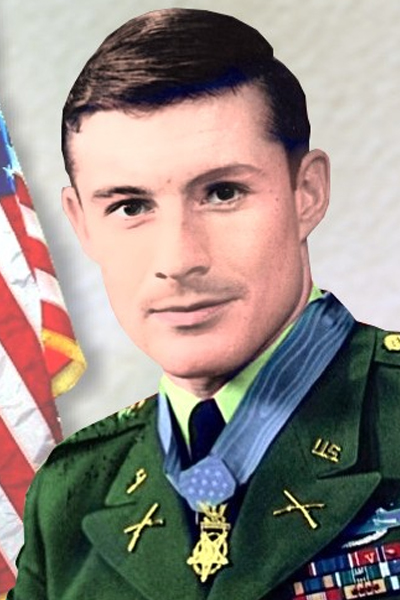
He went to Fort Campbell, Kentucky with orders to select and train a company of soldiers for service in Vietnam. Like most young company commanders, the 23-year-old Paul Bucha was meticulous in his selections; however, for Bucha's company of "clerks and jerks" only the least promising candidates need apply.
An All-American swimmer in high school, Bucha was recruited by several universities for his athletic abilities, but decided to attend West Point instead. In 1967, his company of eighty-nine "clerks and jerks" arrived in Vietnam as part of the 101st Airborne Division. At Fort Campbell, they had been nobody's idea of ideal soldiers. Many, in fact, had flunked infantry training, either for bad attitude or sheer ineptitude. However, Bucha found ways to make use of their talents; under his rigorous leadership, Company D was transformed into a tight, effective unit.
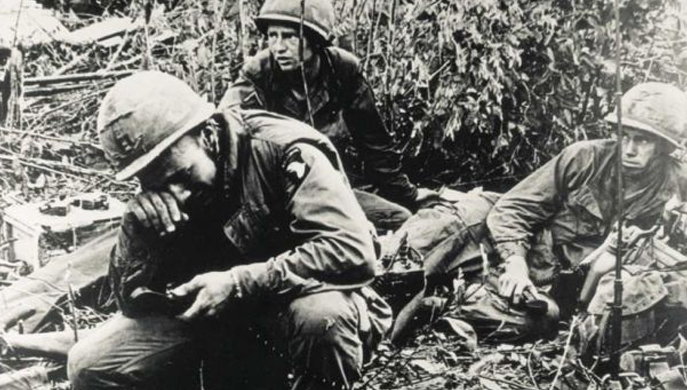
After the Tet Offensive in early 1968, Bucha led his company into a suspected North Vietnamese stronghold near Phuoc Vinh, as part of an effort to push the enemy back from Saigon. For two days, the operation went well, and they met only scattered resistance. On the third day, however, the mission took a dramatic turn. The twelve men in Company D's lead element stumbled upon the camp of a North Vietnamese battalion, bivouacked for the night. Without hesitation, Bucha led the rest of the company in to support them and establish a defense. Though vastly outnumbered, Company D held together in the face of heavy enemy fire. Through the night, Bucha raced back and forth across his company's position, using timed gunfire, grenades, and flashlights to trick the North Vietnamese into thinking they were facing a much larger force. By daybreak, his ruse had worked; the North Vietnamese battalion withdrew, leaving behind more than 150 casualties.
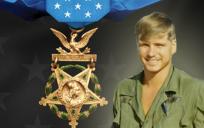
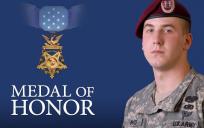
In 1970, Paul Bucha received the Medal of Honor for his actions at Phuoc Vinh. After resigning his commission, he embarked on a successful career in international finance, real estate, and exports. Among his many professional affiliations, he has served as President of the Congressional Medal of Honor Society. In 1997, another of his many talents was recognized with the Gold Medallion Award of the International Swimming Hall of Fame.
His Citation Reads:
For conspicuous gallantry and intrepidity in action at the risk of his life above and beyond the call of duty. CPT Bucha distinguished himself while serving as commanding officer, Company D, on a reconnaissance-in-force mission against enemy forces near Phuoc Vinh. The company was inserted by helicopter into the suspected enemy stronghold to locate and destroy the enemy. During this period CPT Bucha aggressively and courageously led his men in the destruction of enemy fortifications and base areas and eliminated scattered resistance impeding the advance of the company. On 18 March while advancing to contact, the lead elements of the company became engaged by the heavy automatic weapon, heavy machine gun, rocket propelled grenade, Claymore mine and small-arms fire of an estimated battalion-size force. CPT Bucha, with complete disregard for his safety, moved to the threatened area to direct the defense and ordered reinforcements to the aid of the lead element. Seeing that his men were pinned down by heavy machine gun fire from a concealed bunker located some 40 meters to the front of the positions, CPT Bucha crawled through the hail of fire to single-handedly destroy the bunker with grenades. During this heroic action CPT Bucha received a painful shrapnel wound. Returning to the perimeter, he observed that his unit could not hold its positions and repel the human wave assaults launched by the determined enemy. CPT Bucha ordered the withdrawal of the unit elements and covered the withdrawal to positions of a company perimeter from which he could direct fire upon the charging enemy. When one friendly element retrieving casualties was ambushed and cut off from the perimeter, CPT Bucha ordered them to feign death and he directed artillery fire around them. During the night CPT Bucha moved throughout the position, distributing ammunition, providing encouragement and insuring the integrity of the defense. He directed artillery, helicopter gunship and Air Force gunship fire on the enemy strong points and attacking forces, marking the positions with smoke grenades. Using flashlights in complete view of enemy snipers, he directed the medical evacuation of three air-ambulance loads of seriously wounded personnel and the helicopter supply of his company. At daybreak CPT Bucha led a rescue party to recover the dead and wounded members of the ambushed element. During the period of intensive combat, CPT Bucha, by his extraordinary heroism, inspirational example, outstanding leadership and professional competence, led his company in the decimation of a superior enemy force which left 156 dead on the battlefield. His bravery and gallantry at the risk of his life are in the highest traditions of the military service, CPT Bucha has reflected great credit on himself, his unit, and the U.S. Army.