




Record date:
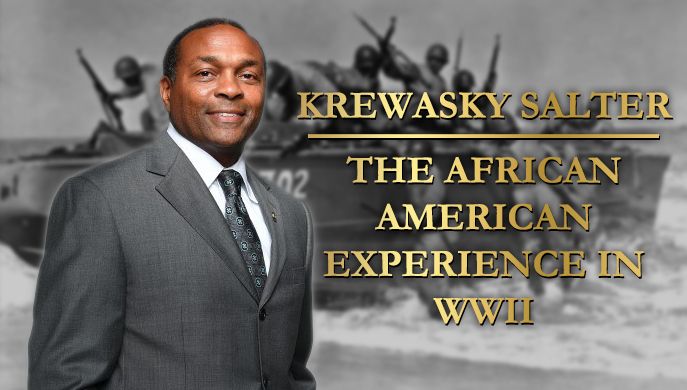
Dr. Krewasky Salter: The African American Experience in WWII
Dr. Krewasky Salter visits the Museum & Library to discuss the African American experience during World War II.
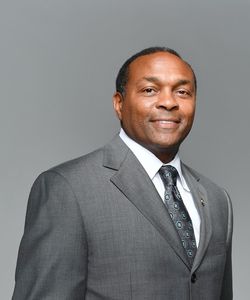
Krewasky A. Salter is a United States Army Colonel (Ret.) currently serving as Executive Director, First Division Museum, where he is expanding military history interpretations through the lens of the 1st Infantry Division. Within his first year the museum has added half a dozen new and inclusive interpretations associated with the 1st Infantry Division. He is also a (Guest) Associate Curator and Military Subject Matter Expert at the Smithsonian Institution, National Museum of African American History and Culture, where he curated the permanent inaugural exhibition titled: Double Victory: The African American Military Experience, and the temporary exhibition titled: We Return Fighting: The African American Experience in World War I which opened on December 13, 2019 and will close on June 14, 2020. He serves on the Army Historical Foundation Board of Directors.
Krewasky is the author, contributing author, advisor and/or editor to more than seven books, including The Story of Black Military Officers, 1861–1948 and Dream A World Anew: The African American Experience and the Shaping of America. Krewasky has worked on two documentaries, including serving as the Associate Producer and Senior Historian for the United States Army sponsored documentary titled: Unsung Heroes: The Story of America’s Female Patriots and has appeared on C-Span, Comcast Newsmakers, CBS This Morning, and several local broadcast media outlets. Dr. Krewasky has over seven years of academic teaching experience, including teaching Military History at the United States Military Academy, West Point; Military Strategy at the Command and General Staff College, Leavenworth; Military Leadership at Howard University, Washington, D.C.; and African American History at several other institutions as an adjunct professor.